the Music Story

Welcome to the Music Story🎵
Your community for exploring the captivating world of music, one story at a time. We're dedicated to brewing up interactive and enriching experiences, sharing fascinating tales of composers, iconic pieces, and hidden musical histories, all while sipping on good conversation and a delicious cup of tea.
🍵 Join us to sip some tea, discover something interesting and connect with the community.
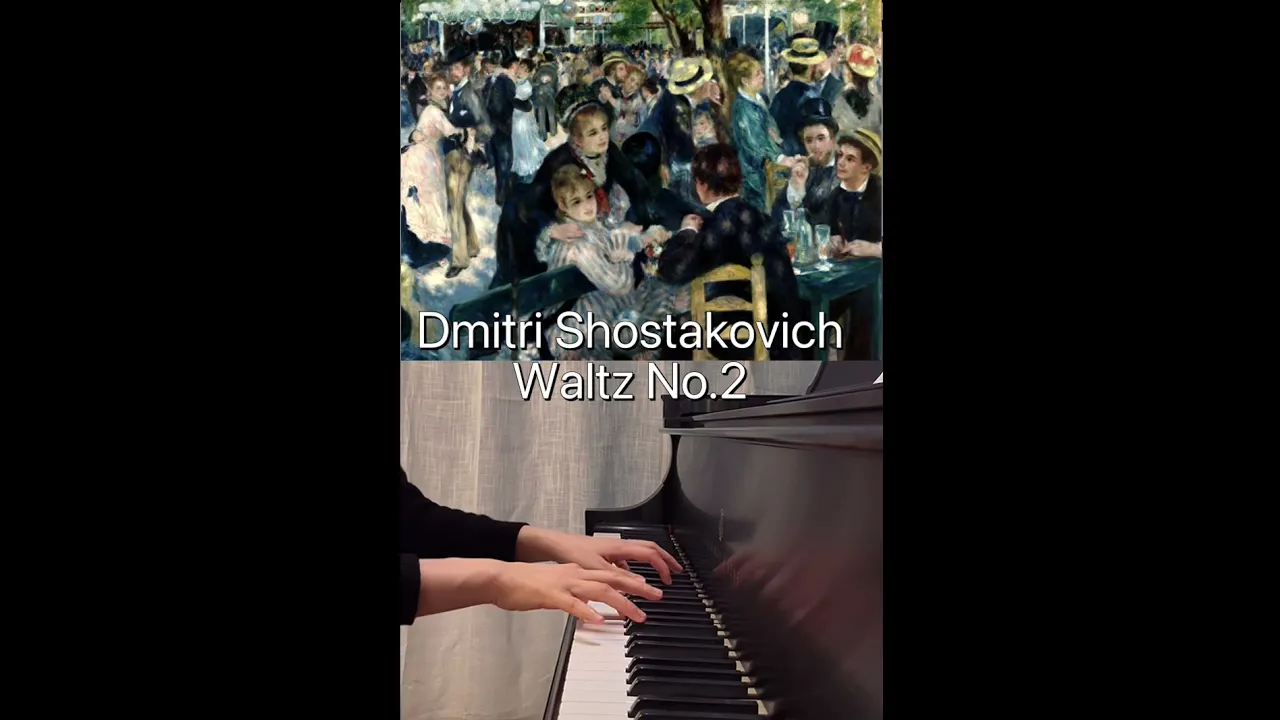
The Secret Story of Shostakovich’s Waltz No. 2
When most people think of a waltz, they picture 19th-century Vienna: spinning silk dresses, bright chandeliers, and effortless joy.So why does Dmitri Shostakovich’s Waltz No. 2 sound so completely different on the piano? Why does its melody feel simultaneously glamorous, nostalgic, and deeply haunting?The secret lies in the story behind the piece—and how we translate an entire orchestral world onto a single instrument.A Waltz Behind the Iron Curtain
Shostakovich composed this famous waltz in 1956 during the Soviet era. Living under intense political pressure and state censorship, his music often hid double meanings.Unlike a lighthearted Viennese dance, Shostakovich wrote a melancholy masquerade.Originally scored for a full variety orchestra, the piece translates brilliantly to the solo piano. Without a full orchestra behind you, the piano solo version strips away the extra noise and reveals the raw, solitary beauty of the melody: half-smiling, half-mourning, and deeply personal.3 Secrets to Playing (and Listening to) the Piano Solo
When you take a grand orchestral piece and adapt it for a single piano player, small interpretive details make a massive difference:1. The "Oom-Pah-Pah" Wrist Balance
In a piano solo, your left hand acts as the entire rhythm section. The trick is to give Beat 1 a warm, grounded depth with a quick wrist drop, then play the chords on Beats 2 and 3 as light as feather-touches. This creates a floating, effortless pulse so your right hand can sing.2. Voicing the Singing Melody
The main theme needs a rich, vocal tone—like a solo instrument spotlighted on a dark stage. Sink your fingers deeply into the right-hand melody keys while keeping the accompaniment gentle underneath.3. The Shadowy Inner Counter-Lines
Beneath the famous main tune, Shostakovich wrote subtle counter-melodies in the middle register. Bringing out those quiet inner notes on the piano gives your solo performance a rich, three-dimensional sound that feels like a dialogue between two dancers.Practice Tip for Adult Learners 🎹
Don't rush the tempo!
It's tempting to play this waltz fast, but the magic of Waltz No. 2 lives in its noble, steady stride. Keep the tempo leisurely and let the romantic right-hand melody stretch slightly at the peaks of each phrase.Bring the Music to Life
🎼 Want to play this arrangement? Grab my approachable, beautifully laid-out easy piano solo score of Waltz No. 2 on Etsy at Neko Art Gallery.🎥 Watch the practice breakdown: Watch my solo practice logs and interpretation demos for this piece on YouTube at In Other Keys.🏛 Explore more classical secrets: Discover the stories, architecture, and practice insights behind your favorite piano pieces at themusicstory.com.
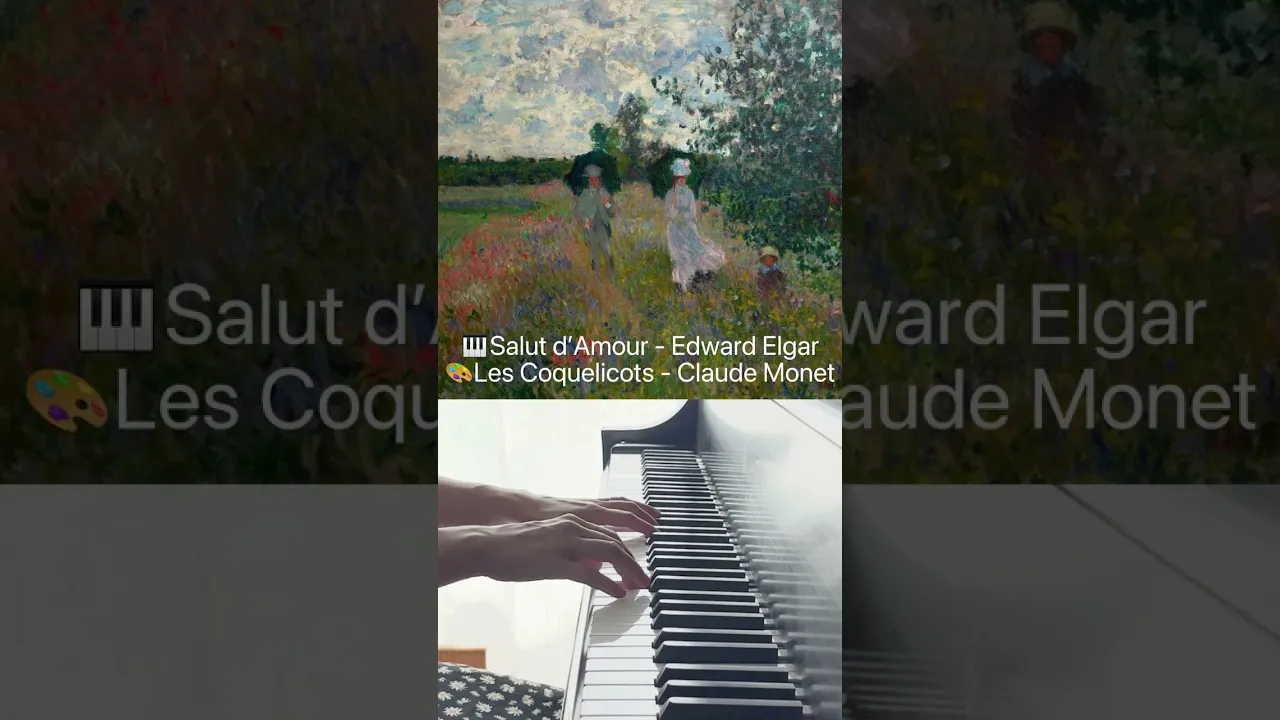
The Love Story Behind Elgar’s Salut d’Amour
Before Edward Elgar became one of Britain’s most celebrated composers, he was a struggling 31-year-old music teacher giving violin and piano lessons to make ends meet.Among his students was Caroline Alice Roberts—the daughter of a high-ranking British Army general. Alice fell in love with her modest music teacher, and despite strong opposition from her upper-class family, she believed in his genius when few others did.In the summer of 1888, while Alice was away on holiday, Elgar sat down at the piano to write her a love letter. But instead of words, he wrote notes.He titled the piece "Liebesgruss" (Love’s Greeting) and gave her the manuscript when he proposed. They married the following year, and that small, heartfelt piano piece—later published under the French title Salut d'Amour—became his very first international success.Translating Romance to the Solo Piano
Salut d'Amour is pure Victorian romanticism. On the solo piano, it shouldn't sound rigid or grand; it should feel like an intimate conversation between two people in a quiet room.Here are 3 interpretation secrets to bring out its warmth on 88 keys:1. The Gentle "Rubato" Pacing
Love letters aren't read in a robotic monotone, and this piece shouldn't be played in strict metronomic time! Allow the tempo to breathe. Lean gently into the climax of each phrase (the high points of the melody) and take a tiny breath before settling back down into the rhythm.2. Balancing the Warm Bass Lines
Elgar’s basslines are famous for their rich, cello-like warmth. In a solo piano arrangement, your left hand isn't just keeping time—it's providing a cushion for the right-hand melody. Keep the left-hand bass notes full and warm, while keeping the secondary accompaniment chords soft and muted.3. Creating a Sweet, Singing Tone (Cantabile)
The main melody was originally written for a solo violin, which means it relies on long, unbroken lines. To mimic that sustained violin bow on the piano, use a smooth legato touch and sink your finger pads gently into the keybeds rather than striking them from above.Practice Tip for Pianists 🎹
Watch the Hand Balance in the Middle Section:
When the piece shifts key and dynamic color in the middle section, keep your right-hand thumb very light. The melody often leaps across intervals, and keeping your hand relaxed prevents the lower notes of the melody from sounding clumsy or heavy.Bring the Music to Life
🎼 Want to play this piece? Get my approachable, beautifully laid-out easy piano solo arrangement of Salut d’Amour on Etsy at Neko Art Gallery.🎥 Watch the practice breakdown: See my solo practice logs and demo clips for this piece on YouTube at In Other Keys.🏛 Explore more musical stories: Discover the secrets, history, and practice insights behind your favorite classical piano works at themusicstory.com.
The 18th-Century Classical Origin of Can't Help Falling in Love
Most people know "Can't Help Falling in Love" as Elvis Presley’s iconic 1961 ballad—the tender closing song of his live concerts and the heart of his film Blue Hawaii.What many listeners and pianists don't realize, however, is that this pop classic wasn't created out of thin air in a 1960s recording studio. Its timeless melody was actually written nearly 200 years earlier in 18th-century France!From a French Royal Romance to Elvis
In 1784, French composer Jean-Paul-Égide Martini wrote a classic romance titled "Plaisir d'amour" (The Pleasure of Love).The song became an instant sensation across Europe, capturing a sweet, bittersweet reflection on enduring love. Fast forward to 1961: songwriters Hugo Peretti, Luigi Creatore, and George David Weiss adapted Martini’s classical melody, slowed down the tempo, and wrote new lyrics specifically for Elvis.When you play Can't Help Falling in Love on the piano, you aren't just playing a pop song—you are playing a 240-year-old classical melody that has survived across centuries, genres, and continents.3 Secrets to Playing it Beautifully on Solo Piano
Because of its classical roots, this piece translates naturally to the solo piano. Here is how to give your performance that warm, sweeping, timeless feel:1. The Gentle Arpeggiated Flow
The left-hand accompaniment relies on a rolling, wave-like motion. Instead of playing block chords, let your left hand flow smoothly upward through each harmony like a harp. Keep your wrist loose and flexible so the motion feels effortless.2. Singing the Top Melody
The right hand carries that famous vocal line. To make the piano "sing" like Elvis (or a classical vocalist), press down through your fingertips with a soft, cushioned touch rather than striking the keys sharply. Give the highest note of each phrase a little extra warmth!3. Breathing Room Between Phrases
Don't rush from one measure to the next. At the end of each musical phrase (right before "Take my hand..." or "For I can't help..."), ease off the tempo slightly for a fraction of a second. That tiny pause creates an expressive, emotional moment for the listener.Practice Tip for Pianists 🎹
Let the Sustain Pedal Clear Cleanly:
Because the harmonies change smoothly from chord to chord, lift and reset your sustain pedal right as your fingers play Beat 1 of every new measure. This prevents the rich bass notes from blurring together into a muddy sound!Bring the Music to Life
🎼 Want to play this arrangement? Get my approachable, beautifully laid-out easy piano solo score of Can't Help Falling in Love on Etsy at Neko Art Gallery.🎥 Watch the practice breakdown: See my solo practice logs and interpretation demos on YouTube at In Other Keys.🏛 Explore more musical stories: Discover the secrets, history, and practice insights behind your favorite piano pieces at themusicstory.com.
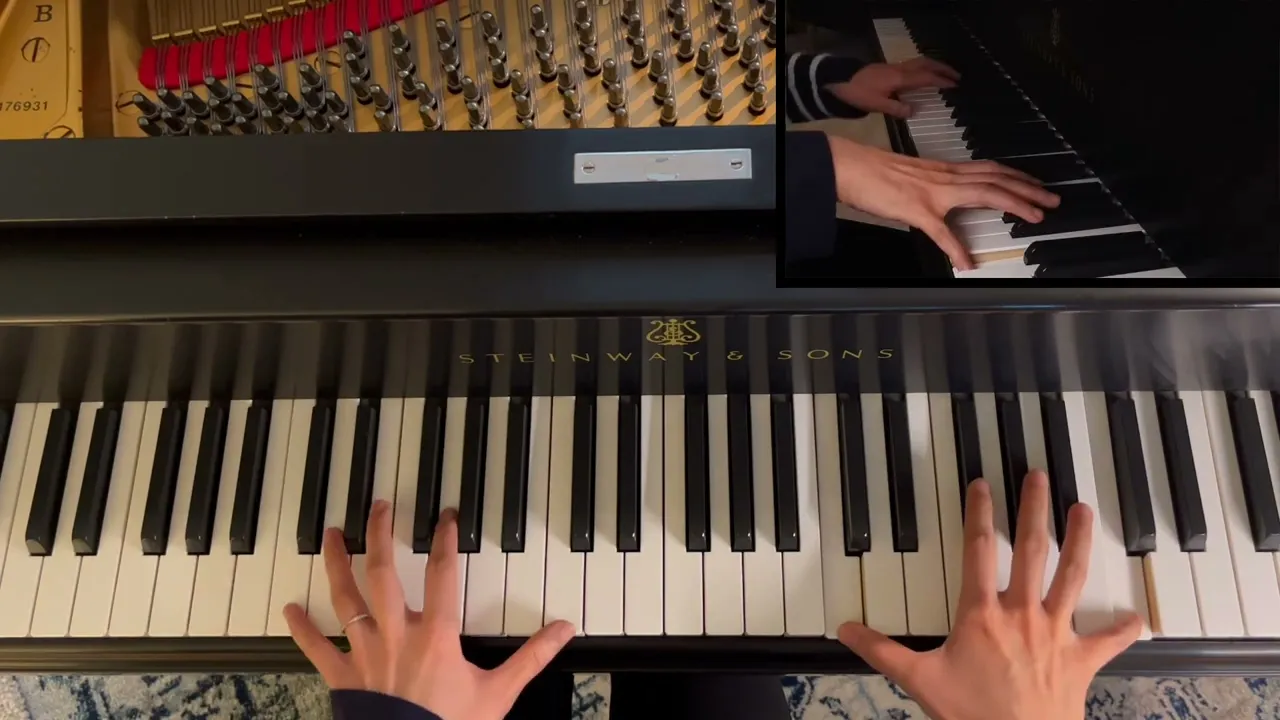
The Bittersweet Nostalgia Behind Moon River
The Bittersweet Nostalgia Behind Moon RiverWhen Henry Mancini sat down at the piano to compose for the 1961 film Breakfast at Tiffany’s, he faced a unique challenge. He needed a melody for Audrey Hepburn—who was not a trained opera singer, but a performer with a limited, sweet vocal range.Mancini wrote a simple, sweeping melody spanning just over an octave. Paired with lyricist Johnny Mercer’s evocative words—inspired by Mercer’s childhood memories of waterways in Savannah, Georgia—"Moon River" captured a universal feeling: the longing for home, adventure, and the unknown.In fact, studio executives initially tried to cut the song from the film after a test screening. Audrey Hepburn famously stood her ground, insisting it stay. The song went on to win an Academy Award and became one of the most beloved melodies in American music history.Translating Nostalgia to Solo PianoOn the solo piano, Moon River relies on simplicity and tone color. Without lyrics, your piano touch carries all the story and nostalgia.Here are 3 secrets to making your solo performance glow:1. The 3/4 Lullaby SwayMoon River is written in 3/4 time, but it shouldn't feel like a fast, spinning waltz. Think of it as a gentle, rocking lullaby or the slow ripple of water. Keep Beat 1 soft and warm, allowing Beats 2 and 3 to drift naturally into the next measure.2. Voicing the "Rainbow" LeapThe opening two notes feature a famous upward leap (a major 6th interval). That upward leap represents the "dream maker" horizon. When playing those two opening notes, sink softly into the first note, and let your right hand float up to the second note with extra warmth and resonance.3. Sustaining the Long TonesBecause the melody features long, sustained notes, keep your left-hand arpeggios flowing underneath to fill the space. A loose wrist and gentle, legato pedaling will keep the piano ringing without sounding heavy.Practice Tip for Pianists 🎹Watch Your Dynamic Balance:Keep your left-hand rolling chords below a m p (medium soft) so the right-hand melody can float gracefully on top at a sweet m f (medium loud) tone. Imagine the left hand as the water, and the right hand as the moonlight reflecting on the surface!Bring the Music to Life🎼 Want to play this arrangement? Get my approachable, beautifully laid-out easy piano solo score of Moon River on Etsy at Neko Art Gallery.🎥 Watch the practice breakdown: See my solo practice logs and interpretation demos on YouTube at In Other Keys.🏛 Explore more musical stories: Discover the secrets, history, and practice insights behind your favorite classical and popular piano pieces at themusicstory.com.
Events
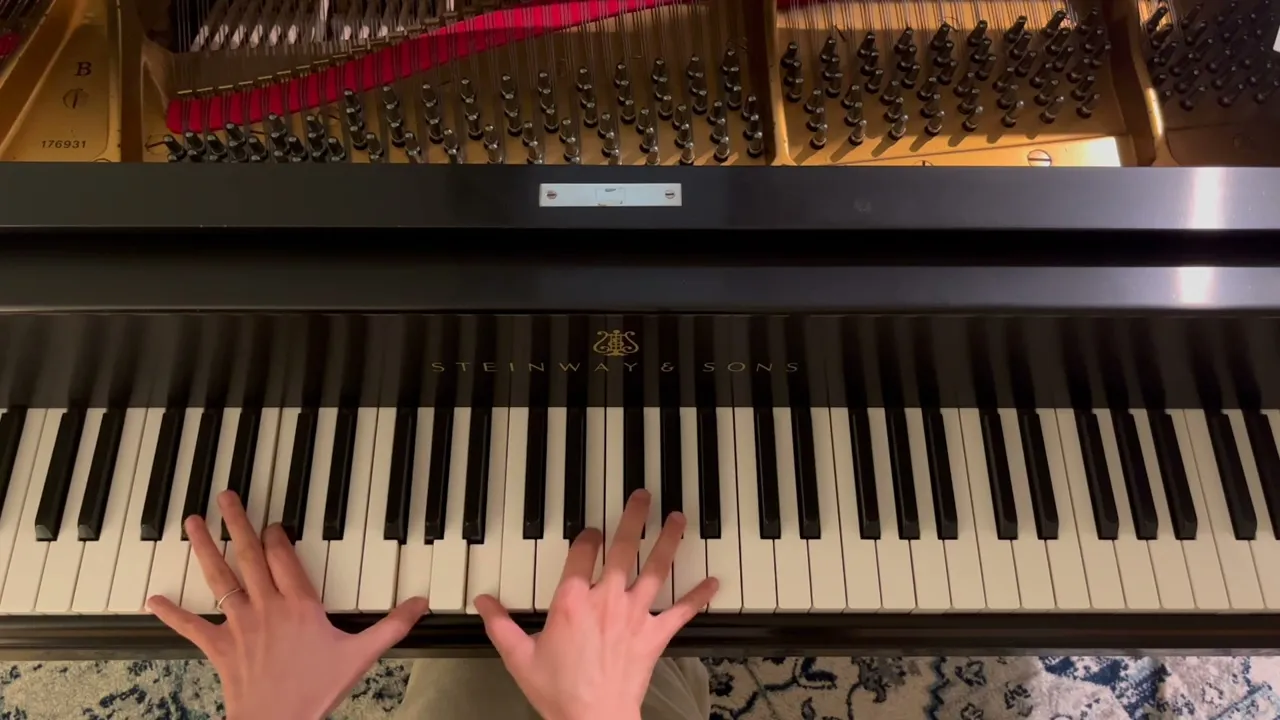
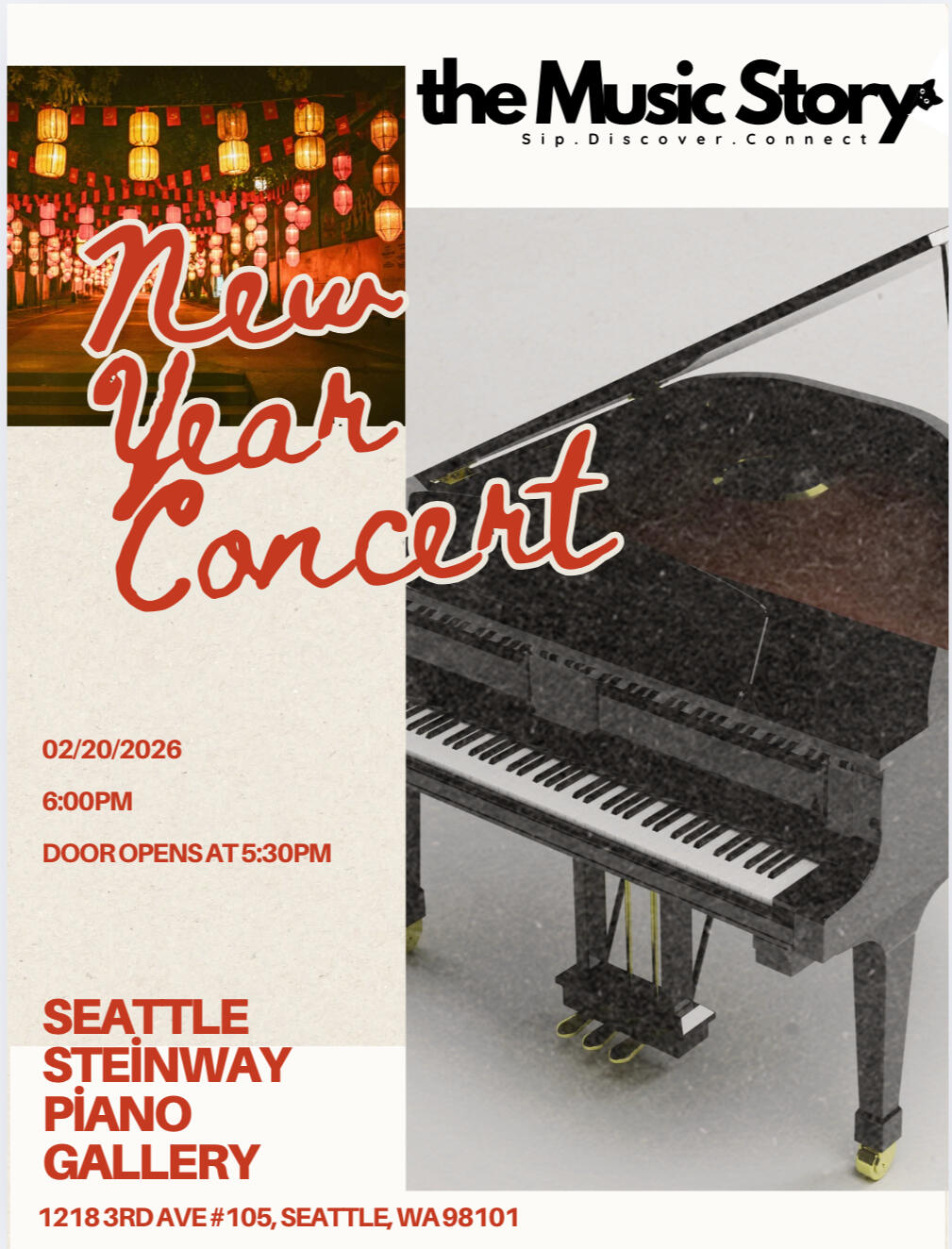
Event: Community Concert - Lunar New Year Concert
Location: Seattle Steinway Gallery
(1218 3rd Ave #105, Seattle, WA 98101)
Date: 2/20/2026
Time: 6:00-7:00pm
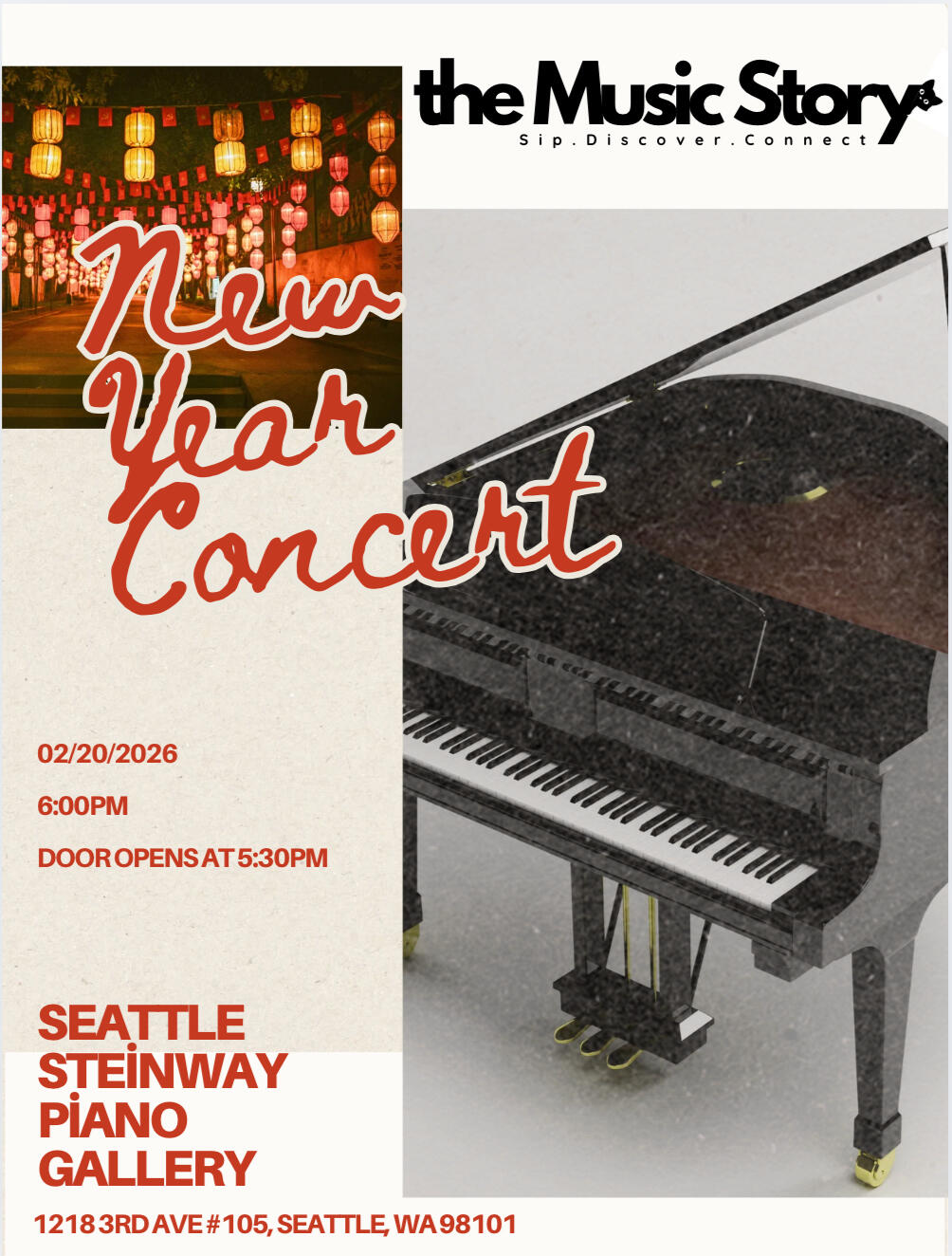
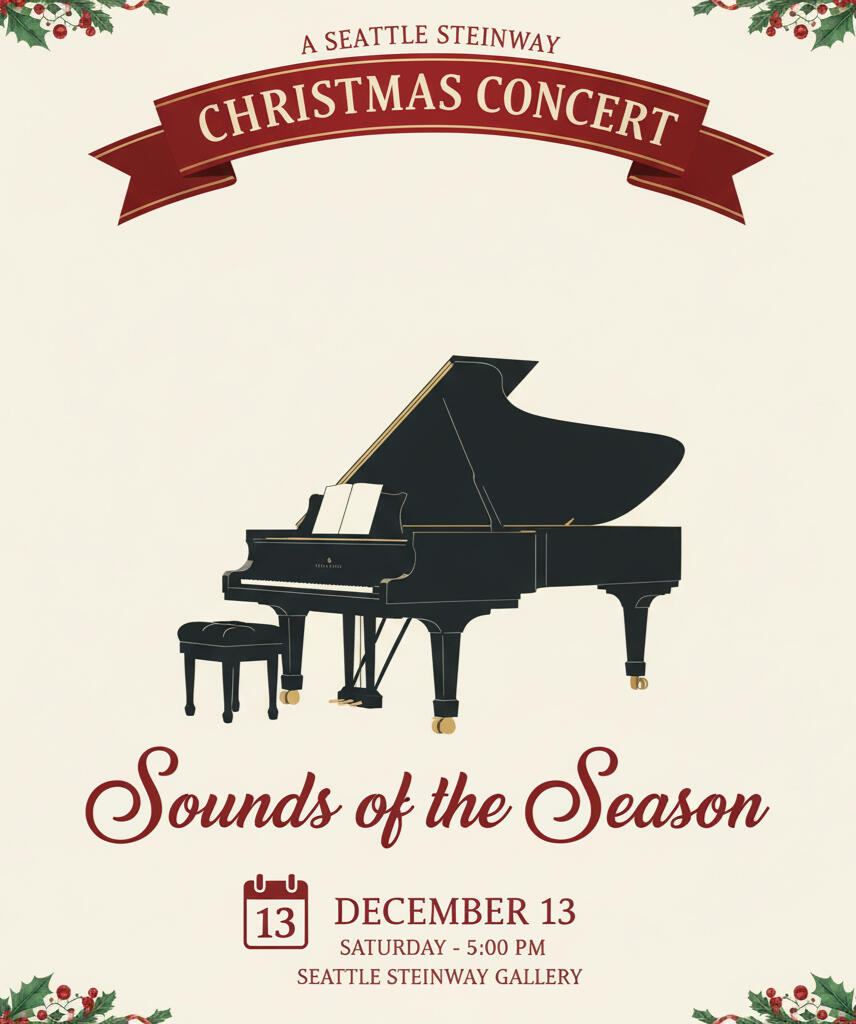
Event: 🎅 🎄 🎁 ✨Concert - Christmas at Steinway
Location: Seattle Steinway Gallery
(1218 3rd Ave #105, Seattle, WA 98101)
Date: 12/13/2025
Time: 5:00-6:30pm
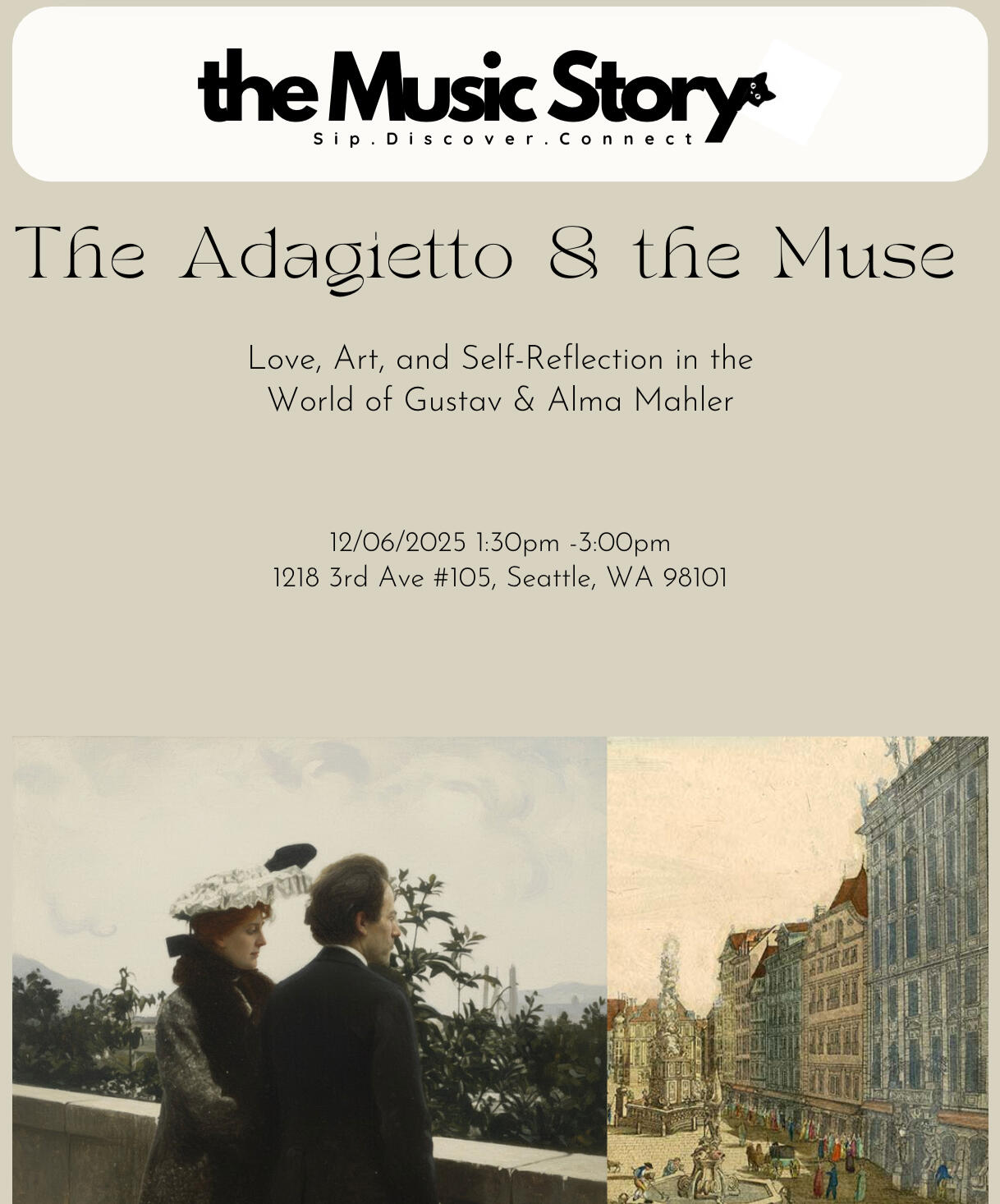
Event: ♪♫♪ Workshop - The Adagietto and the Muse
Location: Seattle Steinway Gallery
(1218 3rd Ave #105, Seattle, WA 98101)
Date: 12/06/2025
Time: 1:30-3:00pm
Event: Concert - Jazz Night
Location: Seattle Steinway Gallery
(1218 3rd Ave #105, Seattle, WA 98101)
Date: 11/15/2025
Time: 5:00-6:30pm
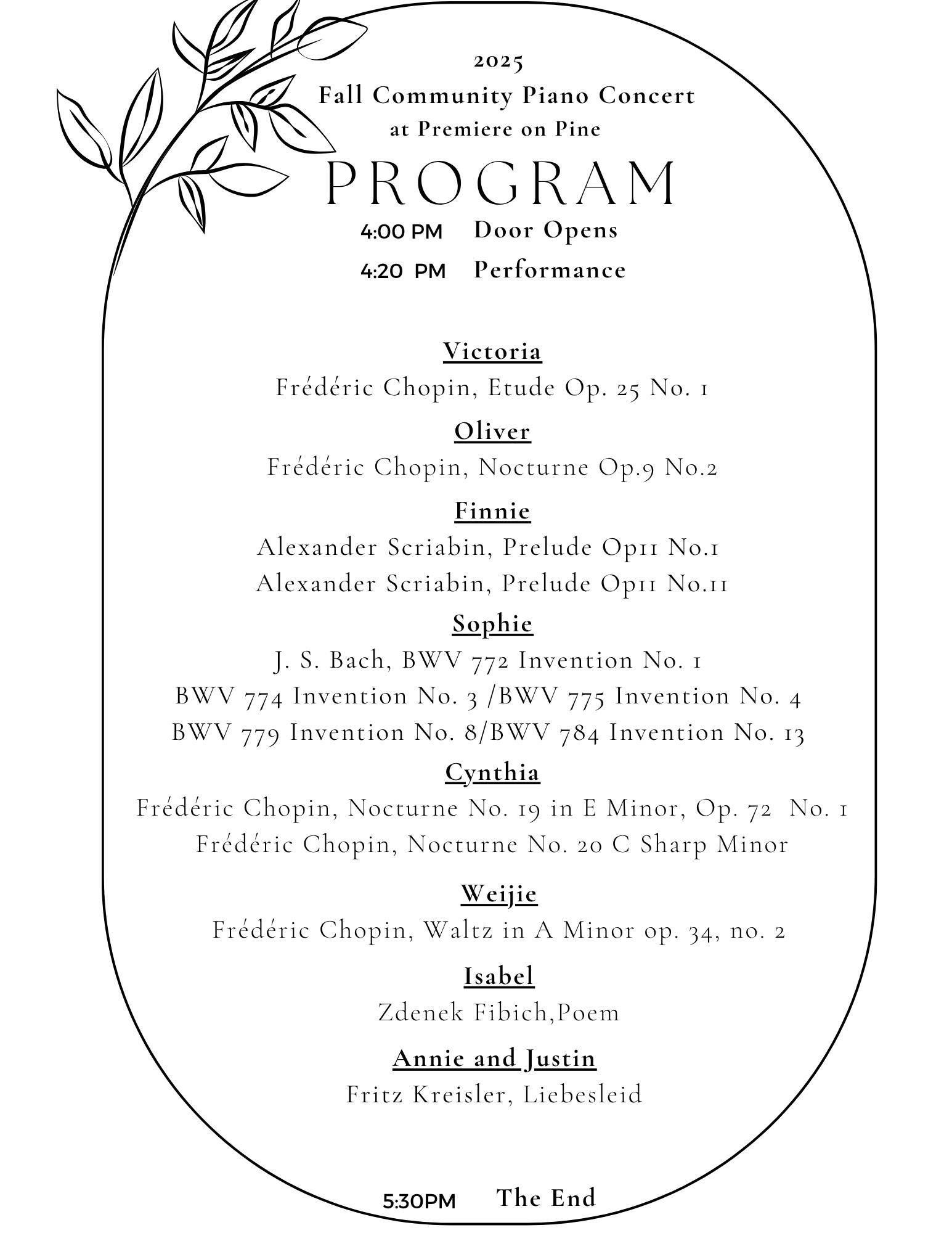
Event: Concert - Classical Night
Location: Premiere on Pine
(1525 9th Ave, Seattle, WA)
Date: 11/8/2025
Time: 5:00-6:30pm

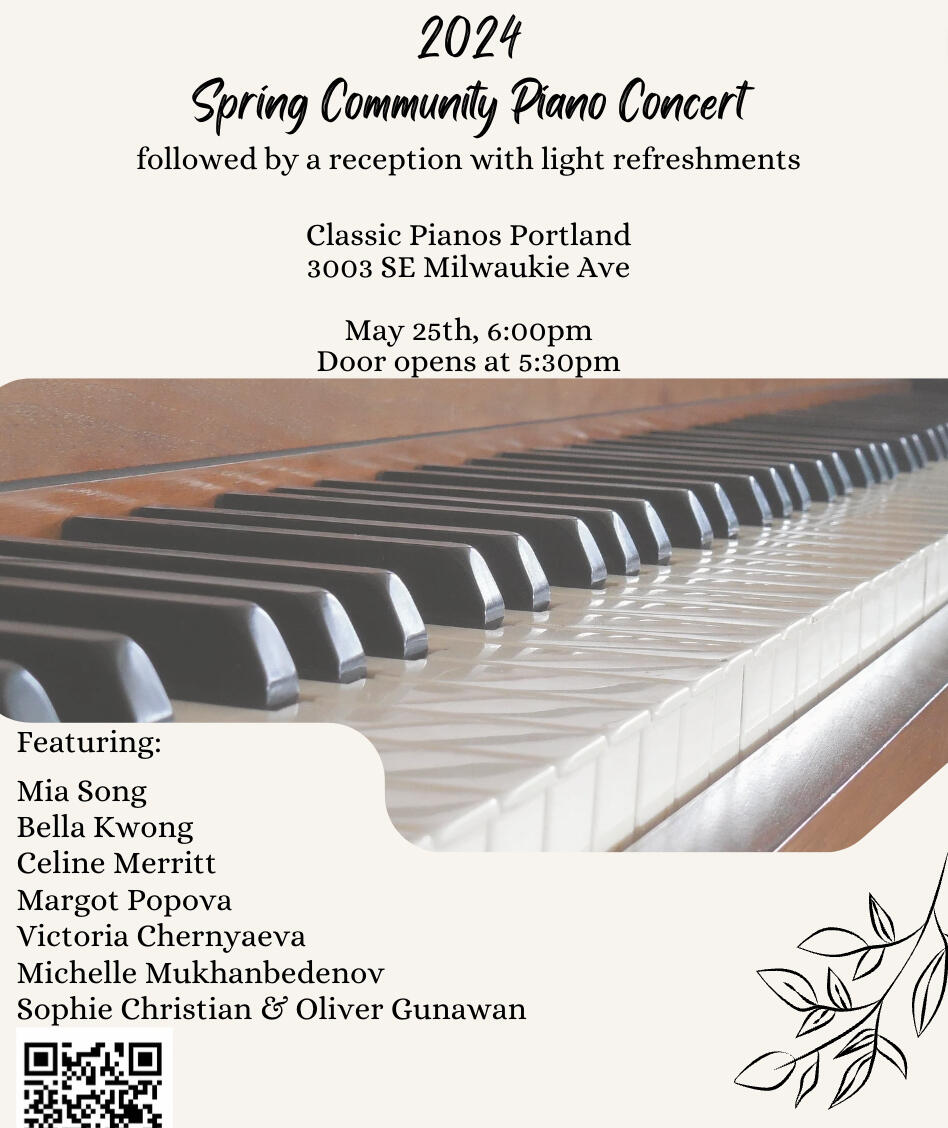
Event: Concert - Spring Community Concert
Location: 3003 SE Milwaukie Ave, Portland, OR 97202
Date: 05/25/2024
Time: 6:00-8:00pm
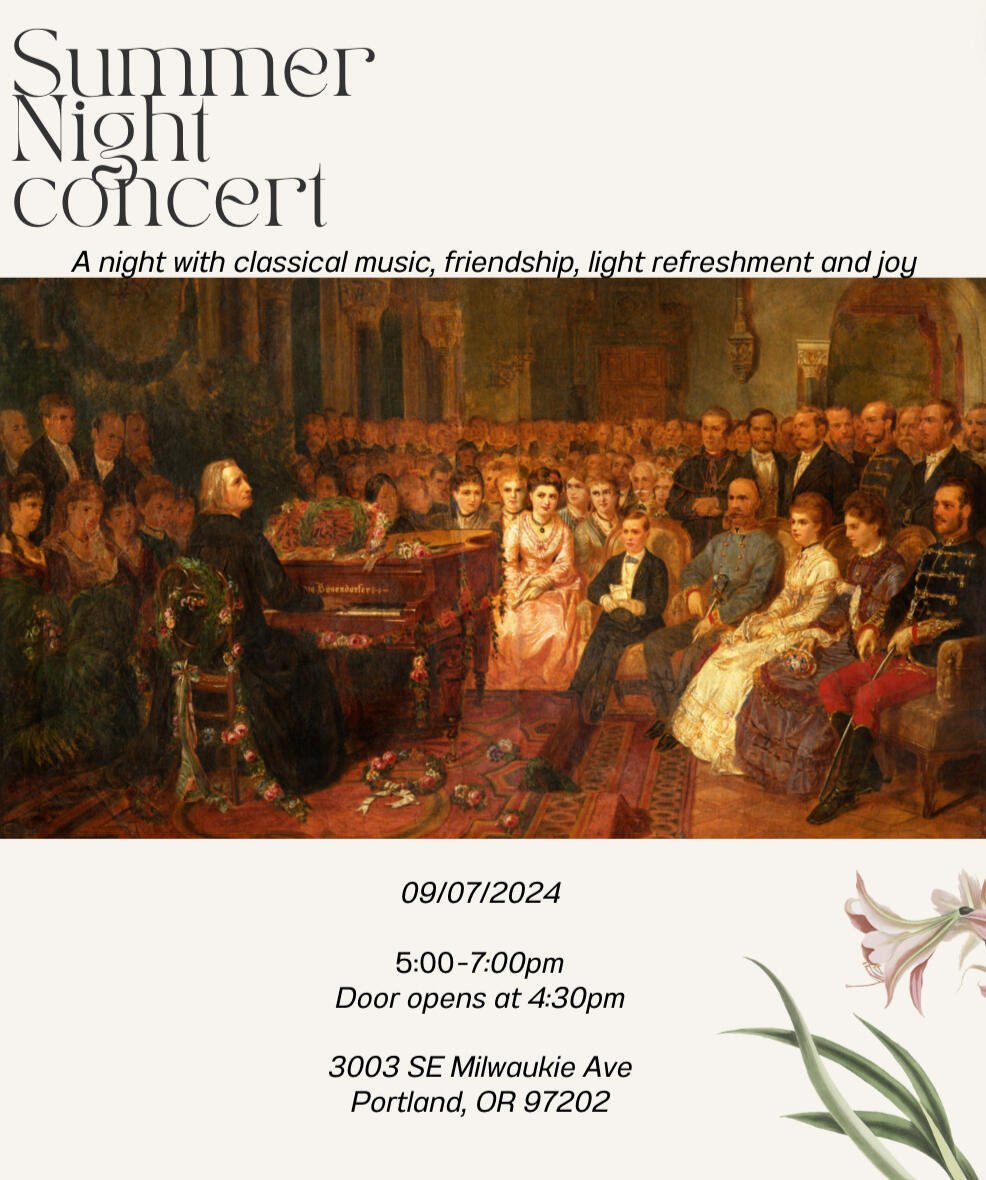
Event: Concert - Summer Night Community Concert
Location: 3003 SE Milwaukie Ave, Portland, OR 97202
Date: 09/07/2024
Time: 5:00-7:00pm

Program
彩雲追月 Silver Clouds Chase the Moon
VictoriaLi Huanzhi, Spring Festival Overture
Piano: Melody
Violin: John ShiehCecile Chaminade, Caprice Impromptu Op153
JiayiIntermissionGeorge Gershwin, Rhapsody in Blue
OliverPhilip Glass: Etudes: No. 6
Jess越人歌 The song of Yue Boatman
Finnie and AimeeButterfly lovers concerto 1st mvt : Adagio cantabile
Annie and Justin

Program
Tchaikovsky - Dance of the Sugar Plum Fairy - Lily/VictoriaTheodor Kirchner - Albumblätter, Op.7, No. 1 -DanielChopin - Nocturne in E Flat Major (Op. 9 No. 2) - MichelleMozart - Fantasy in D Minor - RosaChopin Nocturne Op 48, No1 - OscarChopin "Revolutionary" Etude, op10 #12, and "Ocean" Etude, op.25 #12-JoyceLiszt Transcendental Etude "Wilde Jagd"- Jimmy
Arrival of Santa Claus by H.Engelmann, arr. by J. Schaum - Jimmy and JoyceEdward Elgar - Salut d'Amor -Annie/Justin